
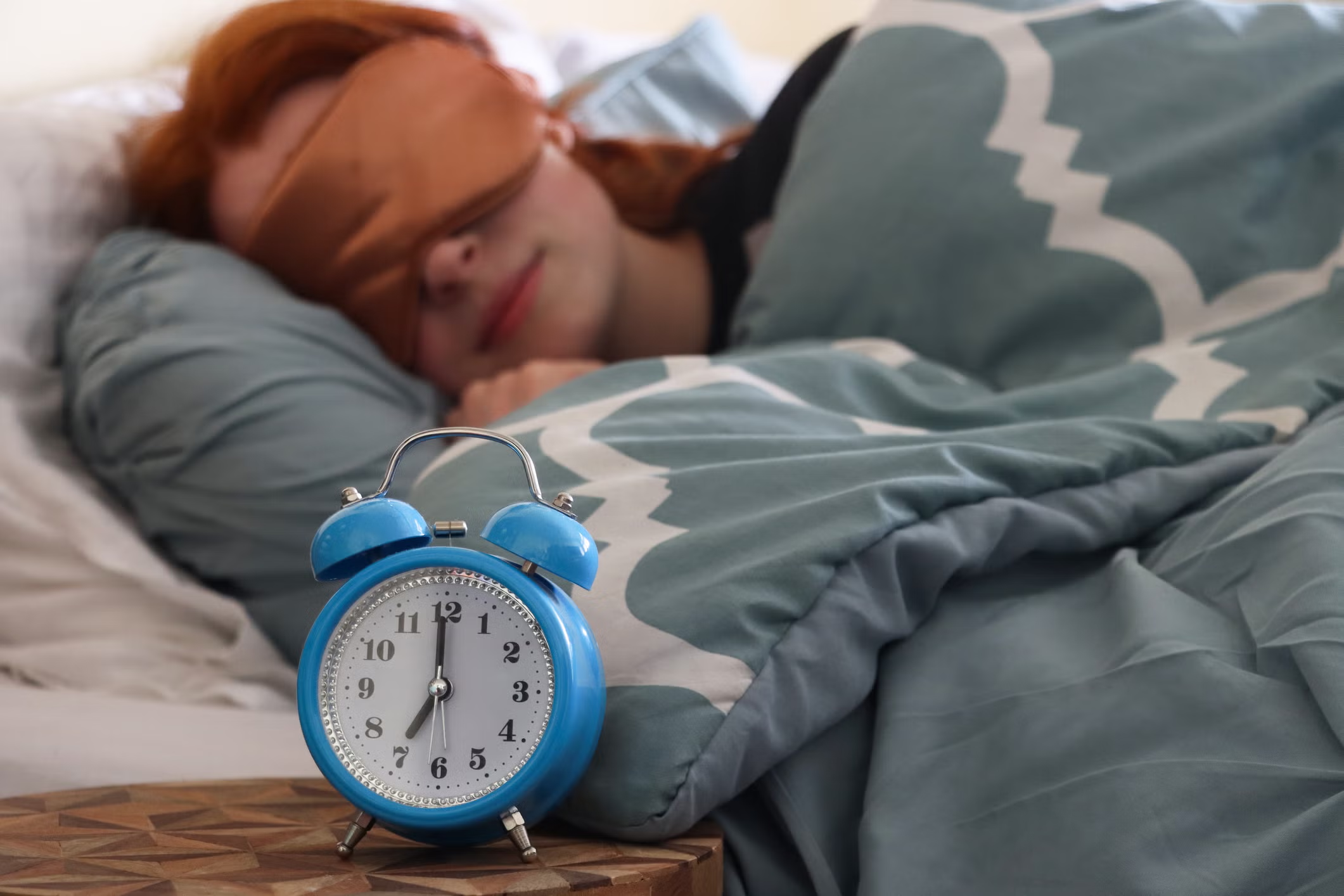
Sleep is essential to all living beings. From the smallest insects to the largest mammals, nearly every species relies on sleep to maintain their physical and mental well-being. Evolution has retained this behavior across so many species because sleep is crucial for survival. After all, lying unconscious for hours could expose an animal to danger, so whatever happens during sleep must be important.
Edgar Allen Poe famously referred to sleep as “those little slices of death.” While this may sound a bit morbid, it’s clear that sleep plays a fundamental role in our health. The long-term effects of sleep deprivation are linked to numerous health conditions, including diabetes, stroke, depression, and even heart disease.
However, despite its importance, sleep remains one of the most mysterious aspects of life. It is associated with ethereal concepts like dreams, altered states of consciousness, and deep emotional experiences. Because of this, sleep has been surrounded by myths for centuries. In this article, we’ll take a closer look at some of the most common sleep myths, separate fact from fiction, and explain the real science behind sleep.
1. Your Brain Shuts Down During Sleep
One of the most persistent myths about sleep is that our brain shuts down when we sleep. This could not be further from the truth. Our brains remain active throughout sleep, even though we might be unconscious. Important bodily functions such as breathing, heart rate regulation, and maintaining body temperature are all controlled by the brain during sleep, ensuring our survival while we rest.
In fact, during Rapid Eye Movement (REM) sleep, when most dreams occur, brain activity is actually very similar to when we are awake. The brain’s neurons fire in a way that is almost identical to the brain activity we experience when we’re conscious. It’s this high level of activity that makes REM sleep so paradoxical—while our brain is working at full capacity, it is the hardest stage to wake up from. This is why REM sleep is often referred to as “paradoxical sleep.”
Our sleep cycle includes four stages: three stages of non-REM sleep (NREM) and one stage of REM sleep. These stages repeat five to six times over the course of the night. The brain patterns and neuronal activity are different in each stage. During NREM sleep, some areas of the brain quiet down, while others, like the amygdala (responsible for processing emotions), remain active. The thalamus, which serves as a relay station for sensory information, behaves differently depending on the stage of sleep. In REM sleep, it becomes highly active and sends sensory signals to the cerebral cortex, essentially supplying the content of our dreams.
2. If You Remember Your Dream, You Slept Well
Another common belief is that remembering your dreams is a sign that you had a good night’s sleep. In reality, this isn’t necessarily the case. Most people dream every night, but we often forget them. Dreams primarily occur during REM sleep, but the brain tends to forget them soon after we wake up. This means that even if we dream every night, most of us don’t recall those dreams.
Interestingly, dreams are more likely to be remembered if we wake up during or immediately after REM sleep, as the memory of the dream hasn’t yet faded. Some studies suggest that certain neurons that are active during REM sleep suppress the memory of dreams. These neurons release melanin-concentrating hormone (MCH), which helps regulate sleep. MCH inhibits the hippocampus, the part of the brain responsible for memory storage. As a result, the content of dreams is quickly forgotten unless we wake up at the right moment to capture it.
In fact, research has shown that people who remember their dreams tend to wake up more frequently throughout the night, which may actually disrupt their overall sleep quality. So, remembering a dream doesn’t necessarily indicate that you slept well. It simply means you woke up during the right part of your sleep cycle to recall the dream.
3. Never Wake Up a Sleepwalker
It’s a common belief that waking a sleepwalker can cause serious harm, such as a heart attack or even death. While waking a sleepwalker can certainly cause confusion and disorientation, there is no evidence to suggest that it is dangerous in the way that many people think. The myth likely comes from the idea that sleepwalking is tied to deep, unconscious states that can have fatal consequences if disturbed.
However, waking a sleepwalker can be tricky. In some cases, sleepwalkers may react aggressively due to confusion or fear. It’s also possible that they may injure themselves while walking around in a sleep-like state. Sleepwalkers can navigate their environment with their eyes closed, which increases the risk of accidents.
The best course of action, according to experts like the UK’s National Health Service (NHS), is to ensure that the sleepwalker is safe and gently guide them back to bed. Once they are back in bed, it may be helpful to gently wake them before letting them fall back to sleep to avoid further episodes. Shouting, startling, or physically restraining a sleepwalker should be avoided unless they are in immediate danger, as it could lead to aggressive behavior.
4. Alcohol Guarantees a Good Night’s Sleep
Many people believe that alcohol helps them sleep better because it makes them feel drowsy and easier to fall asleep. However, while alcohol may help you fall asleep faster, it actually disrupts your sleep cycle and reduces the quality of sleep. This is especially true in the later stages of sleep.
Alcohol has been shown to reduce REM sleep, which is the most restorative stage of sleep. While alcohol might make you fall asleep more quickly, it also shortens the amount of time spent in REM sleep, which leaves you feeling less rested when you wake up. A study on alcohol and sleep found that even moderate alcohol consumption reduces the percentage of REM sleep. Additionally, people who drink alcohol regularly often report having sleep problems, including insomnia.
Overall, while alcohol may make you feel sleepy initially, it doesn’t lead to the kind of deep, restorative sleep that helps you feel refreshed. In fact, people who drink alcohol before bed may wake up more frequently during the night and experience disrupted sleep patterns.
5. Cheese and Other Foods Cause Nightmares
This is another common sleep-related myth that many people have heard, especially in Western cultures: eating cheese before bed causes nightmares. While cheese may be a favorite late-night snack for some, there’s no scientific evidence to support the idea that it directly leads to bad dreams. However, it’s important to note that eating a large meal before bed—whether it’s cheese or anything else—can disrupt sleep due to issues like indigestion or heartburn.
When your stomach is upset, you may wake up more often during the night, which increases the likelihood of remembering your dreams. Also, if you wake up more frequently, there’s a chance that you’ll experience unpleasant dreams, especially if your digestive system is actively working to process the food you ate.
Additionally, eating a large, high-carbohydrate meal before bed can increase your body temperature, triggering night sweats. This can make it harder to stay asleep and could increase wakefulness, leading to more vivid or disturbing dreams. While the cheese and nightmare connection is largely a myth, it’s a good idea to avoid heavy meals before bedtime if you want to sleep soundly.
There is another related myth that certain foods, like turkey, cheese, and milk, can help you sleep better because they contain tryptophan, an amino acid that is involved in the production of serotonin and melatonin, hormones that regulate sleep. However, studies have shown that the amount of tryptophan in these foods is not significant enough to cause drowsiness on its own. So, while these foods might contribute to better sleep in combination with other factors, they aren’t a magical sleep aid.
Conclusion
Sleep is still an area of active research, and many mysteries remain about how and why it works the way it does. However, the research we do have helps debunk many of the myths that have surrounded sleep for centuries. To get better sleep, it’s important to avoid eating large meals close to bedtime, reduce alcohol consumption, and be cautious around sleepwalkers.
By separating fact from fiction and understanding the real science of sleep, we can all take steps to improve the quality of our rest and, in turn, our overall health and well-being.