

Medical Myths: Does Sugar Really Make Kids Hyperactive?
We’ve all heard it before—“Don’t give them candy before bedtime, they’ll go wild!” or “That birthday cake turned my kid into a maniac!” For years, many parents have blamed sugar for their children’s bursts of high energy, restlessness, or erratic behavior. But is sugar really the culprit—or is this one of those persistent health myths that just refuses to die?

Let’s break down the science, explore where this myth came from, and separate fact from fiction when it comes to sugar and kids’ behavior. Spoiler alert: things aren’t as sweet and simple as they seem.
🍬 Where Did the Sugar-Hyperactivity Myth Come From?

The belief that sugar makes children hyperactive isn’t new. It gained major traction in the 1970s, largely due to a controversial theory proposed by Dr. Benjamin Feingold, who suggested that artificial additives—including food dyes and preservatives—could cause hyperactive behavior in children. While sugar wasn’t the focus of his theory, the idea that diet could affect behavior caught on, and sugar quickly became public enemy #1.
By the 1980s and 1990s, sugar had been fully villainized in parenting circles, with many believing it was the sole reason behind their child’s high energy levels, tantrums, and chaotic behavior at parties or holidays. It’s no wonder the myth stuck—after all, sugar is everywhere, and the timing of hyperactivity (after cake or candy) seemed too coincidental to ignore.
🧪 What Does the Research Actually Say?
Science has been asking this question for decades—and the short answer is: there is no solid scientific evidence that sugar causes hyperactivity in children.
Here’s a closer look at the research:
✅ Key Study #1: Double-Blind, Controlled Trials
Numerous well-designed studies, including double-blind placebo-controlled trials (the gold standard in research), have consistently shown no measurable difference in children’s behavior after consuming sugar compared to a placebo.
In one famous study published in the New England Journal of Medicine, children were randomly given either sugar or a sugar-free sweetener, and neither the parents nor the children knew which they received. The results? No difference in activity levels, attention, or mood.
✅ Key Study #2: The Power of Expectation
In another study, parents were told their kids were given sugar—even though they weren’t. Those parents reported increased hyperactivity, even though the kids’ behavior hadn’t changed. This is a powerful example of the placebo effect and parental bias at play.
✅ Meta-Analyses Back It Up
Multiple meta-analyses, which pool data from dozens of studies, have concluded that sugar does not cause hyperactivity in children—even in those diagnosed with ADHD.
So why do we keep believing it?
🧠 Why the Myth Persists
There are several psychological and social reasons why this myth just won’t go away:
1. Context Matters
Kids are usually given sugary treats in high-stimulation environments—think birthdays, holidays, or after-school events—where excitement is already running high. The sugar often gets blamed for behavior that would’ve happened anyway.
2. Confirmation Bias
If a parent believes sugar makes their child hyper, they’re more likely to notice (and remember) the behavior that confirms that belief—even if sugar wasn’t the cause.
3. Parental Perception
Parents might interpret normal, energetic behavior as being “out of control” if they know their child just had a sugary snack. In studies, this perception changes dramatically when the parent doesn’t know what the child consumed.
4. Kids Do Love Sugar
Children naturally have more energy than adults, and they genuinely enjoy sugary treats. It’s easy to confuse excitement about dessert with hyperactivity caused by the sugar.
🍭 Does Sugar Affect Children in Any Way at All?

While sugar may not cause hyperactivity, that doesn’t mean it’s totally harmless. Excess sugar can have other effects on children’s health and behavior, including:
❗ Mood Swings
Large doses of sugar may cause a spike in blood sugar, followed by a crash, which can make kids feel tired, irritable, or moody afterward.
❗ Poor Sleep
Eating sugar close to bedtime can disrupt sleep, especially if it’s paired with caffeine (like in soda or chocolate).
❗ Focus and Attention
While sugar doesn’t directly cause ADHD or hyperactivity, diets high in sugar and low in nutrients can affect a child’s overall ability to focus or stay calm.
❗ Long-Term Health Risks
Regularly consuming too much sugar can increase the risk of:
- Childhood obesity
- Type 2 diabetes
- Tooth decay
- Metabolic issues
⚖️ How Much Sugar Is Too Much?
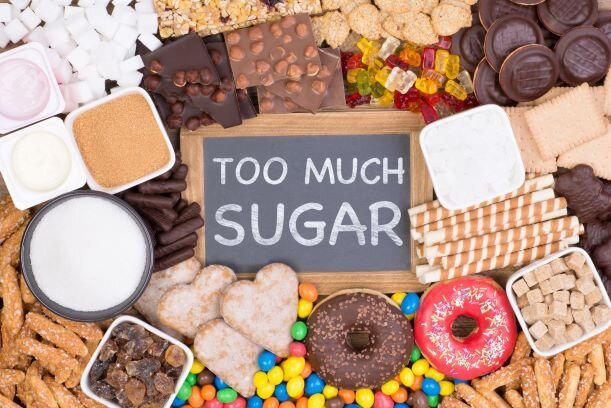
According to the American Heart Association (AHA):
- Children ages 2 to 18 should have no more than 25 grams (about 6 teaspoons) of added sugar per day.
- Children under 2 should avoid added sugars altogether.
But here’s the problem: the average American child consumes more than twice that amount daily, mostly from:
- Sweetened drinks
- Processed snacks
- Desserts and breakfast cereals
🧃 Better Ways to Manage Energy and Behavior
If you’re worried about your child’s energy levels, behavior, or attention span, sugar may not be the real issue. Consider these alternatives:
✅ Healthy Diet
A balanced diet rich in whole grains, fruits, vegetables, lean proteins, and healthy fats supports better focus and steady energy.
✅ Regular Physical Activity
Kids are built to move! Giving them regular chances to run, play, and exercise helps regulate behavior far better than cutting out cupcakes.
✅ Consistent Sleep
Poor sleep is often a bigger contributor to hyperactivity and moodiness than sugar. Aim for:
- 10–13 hours per night for preschoolers
- 9–12 hours for school-age kids
- 8–10 hours for teens
✅ Mindful Treats
There’s nothing wrong with an occasional treat—just make sure it’s part of a balanced lifestyle, not an everyday indulgence.
❓ FAQs: Sugar and Kids’ Behavior
Q: So, sugar doesn’t make kids hyper? Really?
Correct. Despite what many believe, there’s no solid scientific evidence that sugar causes hyperactivity in children. Multiple studies have confirmed this.
Q: What about kids with ADHD?
Even in children with ADHD, studies haven’t found a consistent link between sugar intake and worsening symptoms. However, overall diet quality can influence focus and mood.
Q: Why does my child always go crazy after cake?
It’s probably the environment. Cake usually happens at exciting events—parties, holidays, or celebrations—which naturally stimulate energy and activity.
Q: What about sugar substitutes or “natural” sugars?
Artificial sweeteners don’t appear to cause hyperactivity either, though some kids may be sensitive to certain additives. Natural sugars (like in fruit) are generally fine as part of a balanced diet.
Q: Should I cut out sugar completely?
Not necessarily. Moderation is key. Banning sugar entirely can sometimes backfire and make kids crave it more. Focus on limiting added sugars, not occasional sweets.
🧁 Conclusion: Let’s Bury the Sugar-Hyperactivity Myth for Good
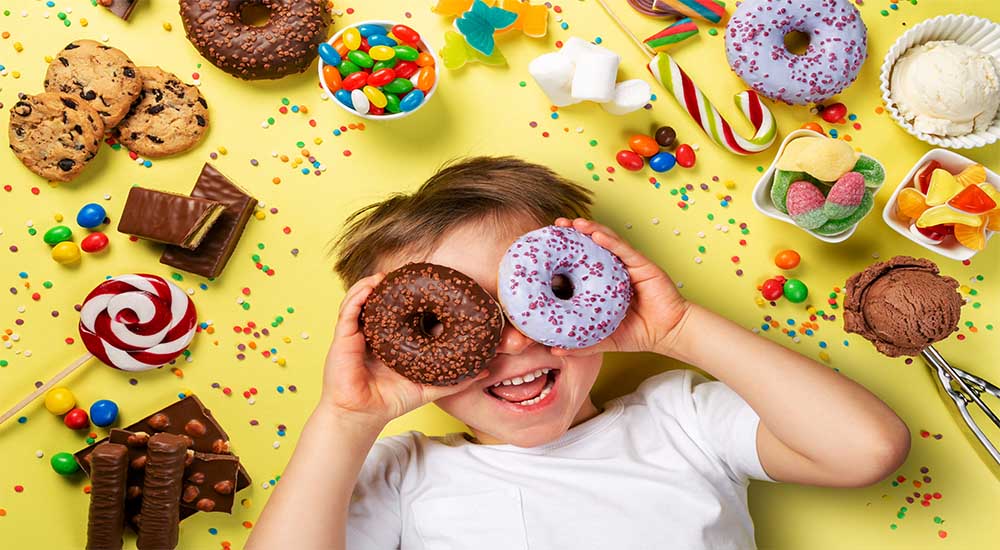
Sugar doesn’t make children hyper—that’s a myth science has thoroughly debunked. What it does do is excite kids because they’re getting a treat, usually in an exciting setting. The real causes of hyper behavior are often tied to environment, sleep, activity levels, and overall diet—not just what’s in their snack.
That said, sugar still needs to be consumed in moderation. It may not turn your kid into a whirlwind, but it can affect their mood, energy crashes, dental health, and long-term well-being.
So, the next time someone blames sugar for a kid’s wild energy at a birthday party, you can gently remind them that it’s more likely the balloons, cake, presents, and sheer excitement of the moment—not the sugar itself.