


Common Myths About STIs and Contraception – Busted!

There’s a lot of confusion when it comes to sexual health, especially around STIs (sexually transmitted infections) and contraception. Let’s clear up some of the biggest myths with expert insights.
1. The Pill Protects You from STIs
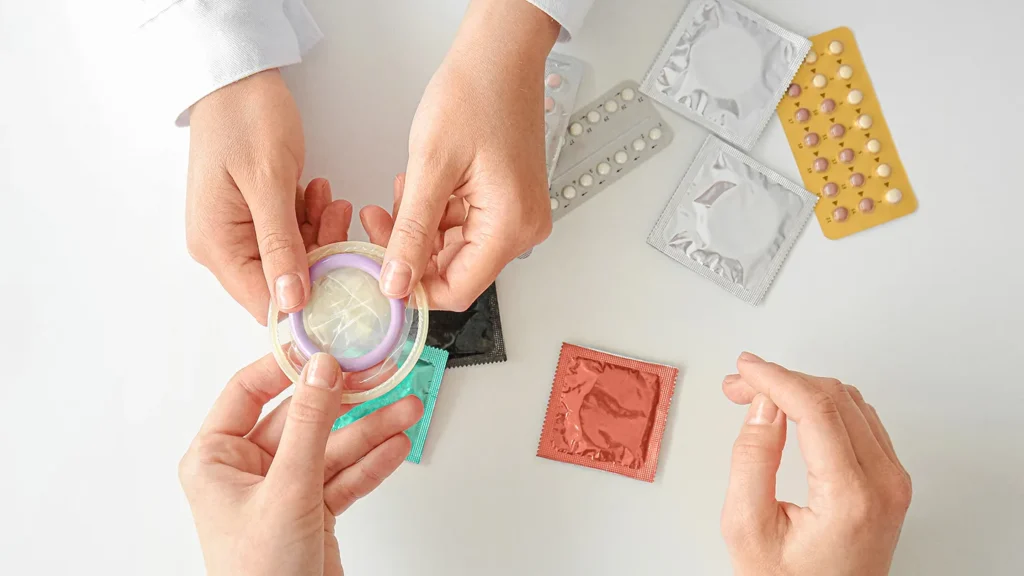
Myth: If I’m on the pill, I don’t need to worry about STIs.
Fact: Birth control pills are great at preventing pregnancy, but they don’t protect against STIs. Dr. Mann explains that “oral contraception only works to prevent pregnancy. The only way to protect yourself from STIs while on the pill is by using a condom.”
The CDC also confirms that birth control methods like the pill, patch, ring, and IUD are effective at preventing pregnancy, but not STIs or HIV.
2. The Withdrawal Method Prevents Pregnancy

Myth: The pull-out method works just fine for preventing pregnancy.
Fact: The withdrawal method (or coitus interruptus) isn’t a reliable way to prevent pregnancy. While it can reduce the risk, Dr. Mann points out that it’s difficult to pull out in time, and pre-ejaculate (pre-cum) can contain sperm. Studies have shown that sperm can be found in pre-ejaculate, making the withdrawal method less effective.
3. The Withdrawal Method Prevents STIs

Myth: Using the withdrawal method will protect me from STIs.
Fact: The withdrawal method does not protect against STIs. Dr. Mann explains that you can still contract infections like HIV, herpes, syphilis, gonorrhea, and chlamydia when using this method.
4. Using Two Condoms Doubles the Protection

Myth: If one condom is good, two must be better, right?
Fact: Actually, using two condoms increases the risk of them breaking due to the added friction. Dr. Mann advises that one condom is the best option for protection. Double-condom use is not recommended.
5. You Can Get STIs from Toilet Seats

Myth: You can catch STIs from sitting on a toilet seat.
Fact: This is one of the most persistent myths, but it’s not true. STIs are transmitted through unprotected vaginal, anal, or oral sex, or by sharing sex toys. Dr. Mann explains that STIs don’t survive long on surfaces like toilet seats, so you’re not at risk from just sitting down.
6. There Are No Treatments for STIs

Myth: STIs can’t be treated.
Fact: Many STIs are treatable, but not all are curable. Bacterial infections like syphilis, gonorrhea, and chlamydia can be cured with antibiotics. Parasitic infections like trichomoniasis can also be cured, but viral infections like HIV, herpes, and HPV don’t have a cure. However, treatments for these can help manage symptoms and reduce the risk of transmission.
7. You Can Only Get STIs from Penetrative Sex

Myth: You can only get an STI if you have penetrative sex.
Fact: STIs can be contracted from oral sex, genital contact, or sharing sex toys. Dr. Mann points out that you can also contract an STI from exposure to infected blood, such as through sharing needles.
8. Only Gay Men Get HIV

Myth: HIV is only a risk for gay men.
Fact: Anyone, regardless of sexual orientation, gender, or age, can contract HIV. Dr. Mann emphasizes the importance of knowing your HIV status and testing regularly. With proper care, people with HIV can live long, healthy lives.
9. You Can Only Transmit an STI If You Have Symptoms

Myth: If I don’t have symptoms, I can’t spread an STI.
Fact: Many STIs don’t show obvious symptoms, and you can still transmit them to others without even knowing it. Dr. Mann explains that “the majority of STIs have no symptoms or only mild symptoms that aren’t recognized as an STI,” which is why regular testing and condom use are essential for protection.
10. Carrying a Phone in Your Bra Can Cause Cancer

Myth: Storing your phone in your bra can cause breast cancer.
Fact: There’s no evidence linking cell phones to cancer. Dr. Zeidman points out that, while we don’t have long-term studies yet, there’s no reason to believe carrying a phone in your bra causes cancer. If you’re concerned, just keep your phone in your pocket or bag instead.
Frequently Asked Questions (FAQ)
Q1: Does the pill protect against STIs?
No, the pill only prevents pregnancy. To protect yourself from STIs, you’ll need to use condoms alongside it.
Q2: Can the withdrawal method prevent STIs?
No, the withdrawal method does not protect against STIs, and it’s not a reliable method for preventing pregnancy either.
Q3: Can I get an STI from a toilet seat?
No, STIs can’t survive on toilet seats. They are spread through direct genital contact or sharing sex toys.
Q4: Are there treatments for STIs?
Yes, bacterial and parasitic STIs can be treated and cured with medication, while viral STIs can be managed with ongoing treatment.
Q5: Can I get an STI without symptoms?
Yes, many STIs don’t show symptoms, so it’s important to get tested regularly, even if you feel fine.
Conclusion
There’s a lot of misinformation around contraception and STIs, but understanding the facts can help keep you safe. Regular testing, using condoms, and being informed about how STIs spread are key steps in protecting yourself and others. If you’re ever in doubt, don’t hesitate to reach out to a healthcare provider for advice!